

Plywood occupies a significant position in the modern timber industry due to its comprehensive performance advantages resulting from scientific design and precise manufacturing processes. Its performance encompasses not only mechanical strength, dimensional stability, and durability, but also exhibits remarkable characteristics in terms of processing adaptability and environmental friendliness, meeting the stringent requirements of various fields such as construction, furniture, packaging, and transportation.
In terms of mechanical properties, plywood uses an odd number of veneers laminated in alternating directions perpendicular to the fiber direction, giving the board excellent bending, compression, and shear resistance in both the planar and thickness directions. The orthogonal arrangement of layers effectively distributes external loads, preventing stress concentration in localized areas, thereby improving overall load-bearing efficiency and impact resistance. Through the selection of different wood species for veneers and adjustment of the number of layers, targeted optimization can be achieved between strength, toughness, and lightweight properties to match different working conditions, from heavy structural components to lightweight decorative elements.
Dimensional stability is one of the outstanding properties of plywood. Natural wood is prone to warping or cracking due to anisotropy when humidity changes, while the cross-laminated structure of plywood cancels out shrinkage and expansion in different directions, allowing the board to maintain flatness and shape regularity in fluctuating temperature and humidity environments. This characteristic is particularly crucial for building formwork, interior decoration, and precision furniture manufacturing, which require high precision and long-term stability.
Durability varies depending on the type of adhesive and surface treatment. Phenolic resin plywood is water and heat resistant, suitable for outdoor and high-humidity environments; urea-formaldehyde resin products are mostly used in dry indoor environments. Moisture-proof, anti-corrosion, or flame-retardant modifications can further extend its service life in harsh environments. Environmental performance is also continuously improving, with low-formaldehyde emission plywood gradually becoming the mainstream for indoor applications, complying with green building and health and safety standards.
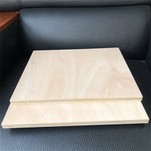
In terms of processing performance, plywood has a flat surface and uniform texture, making it easy to saw, drill, sand, and apply various surface finishes, allowing for flexible creation of complex shapes and diverse surface effects. Good bonding and coating adhesion make it easy to integrate into industrialized production and personalized customization processes, improving production efficiency and product consistency. Furthermore, plywood offers advantages in resource utilization, efficiently integrating small-diameter and fast-growing timber, thereby improving the overall utilization rate of wood resources and alleviating pressure on natural forest resources. Overall, with its balanced mechanical properties, stability, durability, ease of processing, and environmentally friendly and sustainable characteristics, plywood provides reliable and cost-effective material support for modern manufacturing and construction industries.
Performance Analysis and Technical Aspects of Plywood
Dec 16, 2025

Send Inquiry
Categories
Contact Us
- WeChat&whatsapp:
+8613365001069 (Jane Lin-Sales Director) - Email: jane@mjwoodindustry.com (Sales Director)
- Email: rita@mjwoodindustry.com (Sales)
- CBD Sales Office Add: Room 1005, Building C, No. 88 Shuixian Street, Longwen District, Zhangzhou City, Fujian Province
- Factory: 5 manufacturing bases located in Fujian province, China.