

The quality and performance of plywood fundamentally depend on the scientific and rigorous nature of its production methods. As a typical laminated composite material, plywood manufacturing integrates processes such as raw material processing, veneer preparation, gluing and assembly, hot pressing and curing, and post-processing. The process parameters and operating specifications of each stage collectively determine the stability and suitability of the finished product.
Raw material preparation is the starting point of the method system. High-quality plywood often uses veneer raw materials with uniform texture and straight grain, sourced from hardwoods and softwoods, or a combination of both to improve performance and cost-effectiveness. Raw materials must undergo strict sorting, removing rotten, insect-damaged, and severely cracked parts, and be dried according to moisture content standards, generally controlled at 8%-12%, to prevent deformation and poor bonding during subsequent processing.
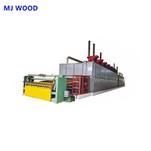
Veneer preparation relies on rotary cutting, slicing, or sawing processes. Rotary cutting is highly efficient and can obtain continuous long veneers, suitable for large-scale production; slicing can present beautiful textures and is often used for surface decoration. Veneer thickness depends on the finished product requirements, usually between 0.5 and 3 millimeters, and requires shearing and trimming to ensure regular dimensions and straight edges.
The gluing and assembly stages directly affect the interlayer bonding strength. Phenolic resin, urea-formaldehyde resin, or other environmentally friendly adhesives are selected according to the application. The application should be uniform and quantitatively controlled, avoiding insufficient or excessive glue. During assembly, it is necessary to ensure that the fiber directions of adjacent veneers are perpendicular or approximately perpendicular, and maintain an odd number of layers in a symmetrical arrangement to form a mechanically balanced structure and reduce the risk of warping.
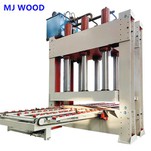
Hot pressing and curing is the core step that determines the overall performance of the board. By controlling temperature, pressure, and time, the adhesive layer is fully cross-linked to form a stable composite. High temperature can accelerate the curing reaction, pressure ensures close contact between the adhesive layer and the wood surface, and time needs to balance the degree of curing and production efficiency. Different types of adhesives and board thicknesses correspond to different process windows, which need to be precisely set to prevent delamination or incomplete curing.
Post-processing includes edge trimming, sanding, surface repair, and quality inspection. Edge trimming ensures the boards are square and precisely sized, sanding improves surface flatness and smoothness, and the repair process eliminates visual defects. Quality testing covers bonding strength, formaldehyde emission, moisture content, and appearance indicators, ensuring the product meets the corresponding grade standards.
The production of plywood is a systematic engineering process guided by structural mechanics principles and centered on process control. Only by strictly adhering to process requirements at every stage-from raw materials and preparation to assembly, hot pressing, and testing-can high-quality plywood with stable performance and wide applications be produced.
Plywood Production Methods and Key Processes
Dec 17, 2025


Send Inquiry
Categories
Contact Us
- WeChat&whatsapp:
+8613365001069 (Jane Lin-Sales Director) - Email: jane@mjwoodindustry.com (Sales Director)
- Email: rita@mjwoodindustry.com (Sales)
- CBD Sales Office Add: Room 1005, Building C, No. 88 Shuixian Street, Longwen District, Zhangzhou City, Fujian Province
- Factory: 5 manufacturing bases located in Fujian province, China.