

Plywood stands out among numerous wood-based materials primarily due to its unique laminated structure design. This structure uses veneers as basic units, scientifically arranged and bonded together to form a whole that combines strength, stability, and adaptability, demonstrating the ingenious application of materials engineering.
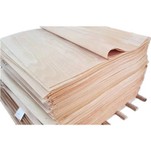
Structurally, plywood uses an odd number of veneer layers cross-laminated, with the fiber direction of adjacent layers being perpendicular or nearly perpendicular. This orthogonal lamination effectively counteracts the deformation tendencies caused by the anisotropy of wood, making the shrinkage and expansion of the board in the plane and thickness direction more balanced, significantly reducing the risk of warping and cracking. The thickness of each veneer layer is usually between 0.5 and 3 millimeters, and the number of layers depends on the application, commonly ranging from three-ply and five-ply to multi-layer structures. Increasing the number of layers can improve overall rigidity and load-bearing capacity while maintaining lightness.
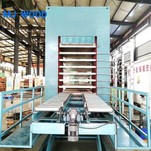
In the interlayer bonding process, the choice of adhesive and the uniformity of its application directly affect the structural integrity. Phenolic resin adhesives are water-resistant and heat-resistant, suitable for outdoor and high-humidity environments; urea-formaldehyde resin adhesives are low-cost and have strong bonding strength, and are mostly used in dry indoor applications. The hot-pressing process, through precise control of temperature, pressure, and time parameters, promotes the full curing of the adhesive layer, achieving rigid connection and synergistic stress distribution between the veneers.
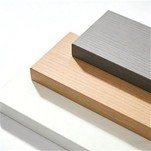
From a cross-sectional view, the plywood structure shows a clear layered texture. The surface layer often uses veneers with beautiful texture and high strength to improve the appearance quality, while the core layer can utilize lower-cost or more resilient materials to balance economy and performance. This differentiated material selection strategy ensures that the structural design is highly matched to functional requirements.
Overall, the essence of plywood's structure is to reconstruct the performance of wood through lamination, overcoming the limitations of natural wood through fiber direction control and interface bonding reinforcement, providing a reliable structural and decorative base material for construction, furniture, transportation, and other fields.
Plywood Structure Analysis: Laminated Construction Shapes Superior Performance
Dec 11, 2025
No Information


Send Inquiry
Categories
Contact Us
- WeChat&whatsapp:
+8613365001069 (Jane Lin-Sales Director) - Email: jane@mjwoodindustry.com (Sales Director)
- Email: rita@mjwoodindustry.com (Sales)
- CBD Sales Office Add: Room 1005, Building C, No. 88 Shuixian Street, Longwen District, Zhangzhou City, Fujian Province
- Factory: 5 manufacturing bases located in Fujian province, China.