

Plywood's ability to play a crucial role in numerous fields such as construction, furniture, packaging, and transportation stems from the functional foundation laid by its unique structural design and composite manufacturing process.Essentially, it transforms the inherent performance limitations of natural wood into controllable advantages through artificial manipulation, thus creating a material system that combines mechanical strength, dimensional stability, and processing adaptability.
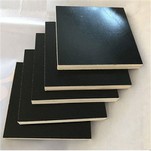
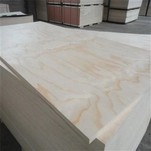
The functional basis is primarily reflected in the mechanical balance of its layered structure. Plywood consists of multiple layers of veneers cross-laminated in alternating fiber directions and bonded together under high temperature and pressure using adhesives. The symmetrical arrangement of odd-numbered layers allows internal stresses to cancel each other out during changes in humidity and temperature, effectively suppressing warping, twisting, and cracking, ensuring dimensional stability in both the planar and thickness directions. This structure allows plywood to distribute stress evenly across each layer when subjected to bending, compression, and shear loads, significantly improving overall load-bearing capacity and service life.
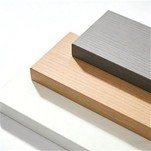
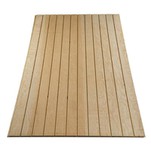
Secondly, the functional basis of plywood relies on the design flexibility of material composites. Veneers from different tree species can be combined as needed. The surface layer can be made of materials with beautiful grain and high strength to enhance decorative and wear resistance properties, while the core layer can use wood with good toughness or lower cost to balance economic efficiency and structural requirements. By adjusting the veneer thickness and number of layers, the product can be optimized for lightweight, high-strength, and impact-resistant applications, precisely matching specific working conditions.
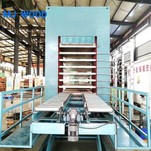
In terms of interface bonding, the use of high-performance adhesives and the control of the hot-pressing process constitute another key foundation. The adhesive layer is uniform and dense, forming a strong bond with the wood fibers. This not only ensures synergistic stress distribution between layers but also provides the board with functional properties such as water resistance, moisture resistance, or weather resistance, thus expanding its applicability in outdoor, high-humidity, and large temperature difference environments.
Furthermore, plywood retains the processing friendliness of wood, allowing for sawing, planing, drilling, sanding, and various surface treatments, compatible with both industrialized mass production and personalized customization. In terms of resource utilization, it can efficiently integrate small-diameter timber and fast-growing timber, improving wood utilization efficiency and creating an environmentally friendly and functionally balanced material solution. Therefore, it is evident that the functional basis of plywood is the result of a combination of structural mechanics, material composite principles, and process control, which provides solid support for its widespread and stable engineering applications.
The Functional Basis and Technical Support of Plywood
Dec 14, 2025

Send Inquiry
Categories
Contact Us
- WeChat&whatsapp:
+8613365001069 (Jane Lin-Sales Director) - Email: jane@mjwoodindustry.com (Sales Director)
- Email: rita@mjwoodindustry.com (Sales)
- CBD Sales Office Add: Room 1005, Building C, No. 88 Shuixian Street, Longwen District, Zhangzhou City, Fujian Province
- Factory: 5 manufacturing bases located in Fujian province, China.