
What Is Phenolic Plywood?
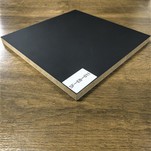
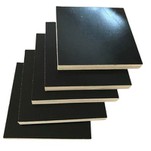
Phenolic plywood is a type of engineered plywood made with multiple veneer layers bonded using phenolic or WBP adhesive, and coated with a phenolic film on one or both sides. This structure provides:
- Strong bonding and structural stability
- High resistance to moisture and chemicals
- Smooth, durable surface for repeated use
It is widely used in formwork systems for slabs, walls, columns, and beams.
1. Excellent Water Resistance
One of the biggest advantages is its high resistance to water and humidity.
- The phenolic film prevents water penetration
- WBP glue resists delamination under wet conditions
- Suitable for outdoor and high-moisture environments
This makes phenolic plywood ideal for repeated concrete casting in challenging climates.
2. High Reusability (Lower Cost per Use)
Phenolic plywood is known for its long reuse life, which directly reduces project costs.
Typical reuse cycles:
- Standard quality: 10–15 times
- High quality: 15–25+ times
With proper handling (release oil, edge sealing, correct storage), reuse cycles can be maximized-lowering cost per pour significantly.
3. Smooth Concrete Finish
The phenolic film surface provides a clean, even, and glossy finish on concrete.
Benefits include:
- Reduced need for plastering or surface correction
- Improved appearance of exposed concrete
- Consistent finish across multiple pours
This is especially important for architectural concrete and visible structures.
4. High Strength and Load Capacity
The multi-layer structure and strong adhesive bonding give phenolic plywood excellent load-bearing performance.
- Suitable for heavy concrete pressure
- Maintains shape under stress
- Reduces risk of deformation or failure
Commonly used thicknesses, such as 18mm and 21mm, are ideal for demanding formwork systems.
5. Strong Wear and Abrasion Resistance
The phenolic coating enhances surface hardness and durability.
- Resists abrasion from concrete and tools
- Maintains surface quality over multiple cycles
- Less surface damage compared to standard plywood
This directly contributes to a longer service life.
6. Dimensional Stability
Phenolic plywood performs well under temperature and humidity changes.
- Minimal expansion and contraction
- Maintains flatness and alignment
- Reduces formwork gaps and leakage
This stability is critical for precision construction work.
7. Easy Handling and Installation
Despite its strength, phenolic plywood remains easy to process on-site.
- Can be cut, drilled, and fixed with standard tools
- Compatible with common formwork systems
- Faster installation compared to metal systems
This improves labor efficiency and construction speed.
8. Cost-Effective Alternative to Metal Formwork
Compared with steel or aluminum formwork, phenolic plywood offers a better cost-performance balance.
| Material | Initial Cost | Reuse Times | Cost Efficiency |
|---|---|---|---|
| Phenolic Plywood | Medium | 10–25 | High |
| Film Faced Plywood | Low–Medium | 8–20 | Good |
| Steel Formwork | High | 50+ | High (long-term) |
| Plastic Formwork | High | 30–50 | Medium |
For many projects, phenolic plywood providesoptimal ROI.
Applications of Phenolic Plywood in Concrete Forms
Phenolic plywood is widely used in:
Structural Formwork
- Slab formwork
- Wall formwork
- Beam formwork
- Column formwork
Large-Scale Projects
- High-rise buildings
- Bridges and tunnels
- Infrastructure construction
Its performance makes it suitable for both standard and complex formwork systems.
How to Choose High-Quality Phenolic Plywood
To maximize advantages, buyers should focus on:
1. Core Quality
- Hardwood core → stronger, longer lifespan
- Uniform veneer structure → better stability
2. Glue Type
- Ensure WBP or phenolic glue for water resistance
3. Film Quality
- Smooth, thick, and well-bonded surface
- Resistant to peeling and scratches
4. Thickness Selection
- 18mm → standard projects
- 21mm → heavy-duty applications
5. Supplier Reliability
- Stable production capacity
- Export experience
- Consistent quality control
FAQ
Is phenolic plywood better than film faced plywood?
Phenolic plywood generally offers better durability and higher reuse times, making it suitable for more demanding projects.
How many times can phenolic plywood be reused?
Typically 10–25 times, depending on quality and handling.
Is phenolic plywood waterproof?
It is highly water-resistant, thanks to phenolic film and WBP glue.
What thickness is best for concrete formwork?
18mm and 21mm are the most commonly used for construction formwork.
Conclusion
The advantages of phenolic plywood for concrete forms-including water resistance, high reusability, smooth finish, and strong load capacity-make it a top choice for construction professionals worldwide.
For importers and contractors, selecting high-quality phenolic plywood from a reliable supplier can significantly improve project efficiency, reduce costs, and ensure consistent performance.