

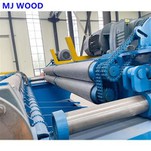
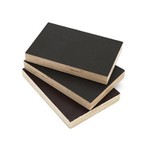
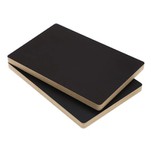
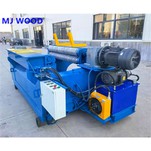
As important equipment in the artificial board industry, plywood machinery's technical characteristics profoundly reflect the comprehensive requirements of board production processes for precision, efficiency, and stability. Through long-term evolution, this type of equipment has developed significant features such as high structural integration, strong functional specificity, excellent control precision, and adaptability to flexible production, becoming a core force supporting the large-scale and high-quality manufacturing of modern plywood.
Firstly, plywood machinery generally possesses a high degree of structural integration and process衔接 (process connection) capabilities. From log peeling to veneer drying, gluing and assembly, pre-pressing and hot pressing, and finally edge trimming and sanding, the equipment for each process is designed with attention to process continuity and spatial coordination. Modular layout reduces material transfer steps, minimizing deformation and damage risks during processing. For example, the coordinated design of the hot press and pre-press allows for rapid shaping of the veneer, effectively preventing uneven premature curing of the adhesive layer and ensuring the adhesive strength of the finished product.
Secondly, strong functional specificity is a prominent technical feature. Different process equipment is specifically optimized according to the physical characteristics of the process: the gluing machine uses a combination of metering rollers and spreading rollers to precisely control the amount and uniformity of adhesive application; the hot press is equipped with multi-layer heating plates and a pressure gradient control system to ensure uniform transfer of heat and pressure in the thickness direction of the board, meeting the stringent requirements of simultaneous curing of multi-layer veneers. This specialized design significantly improves process realization and product consistency.
Thirdly, control precision and automation levels are continuously improving. Modern plywood machinery widely uses CNC technology and sensor detection to achieve real-time closed-loop control of key parameters such as temperature, pressure, and speed. Servo drives and variable frequency control make equipment operation more stable, and combined with high-precision displacement sensors and online thickness measurement devices, errors can be dynamically corrected during high-speed production, ensuring that board thickness tolerances and surface flatness meet industry standards.
Furthermore, equipment flexibility and energy-saving characteristics are becoming increasingly prominent. Through adjustable roller spacing, modular press plates, and programmable logic control, the same machine model can adapt to the production of boards of various specifications and structures, meeting the market demand for small batches and multiple varieties. In terms of energy saving, the application of technologies such as heat recovery, low-resistance transmission, and intelligent standby management effectively reduces energy consumption and carbon emissions, aligning with the trend of green manufacturing. Overall, the technical characteristics of plywood machinery lie in the organic integration of process coordination, specialized functions, precise control, and flexible energy efficiency. This not only ensures the efficiency and quality of large-scale production but also provides strong support for meeting diverse market demands and achieving sustainable development.
Technical Characteristics Analysis of Plywood Machinery
Dec 25, 2025


Send Inquiry
Categories
Contact Us
- WeChat&whatsapp:
+8613365001069 (Jane Lin-Sales Director) - Email: jane@mjwoodindustry.com (Sales Director)
- Email: rita@mjwoodindustry.com (Sales)
- CBD Sales Office Add: Room 1005, Building C, No. 88 Shuixian Street, Longwen District, Zhangzhou City, Fujian Province
- Factory: 5 manufacturing bases located in Fujian province, China.