

As the core equipment for large-scale plywood production, the operating quality and service life of plywood machinery largely depend on the operator's adherence to operating procedures, parameter control capabilities, and daily maintenance awareness.Mastering scientific usage techniques can not only improve equipment operating efficiency and processing accuracy but also effectively reduce failure rates and production costs, ensuring the continuity and stability of the production process.
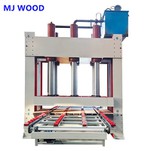
First, a comprehensive inspection and preheating should be performed before starting the machine. The operator must confirm that all mechanical components are securely fastened, the lubrication system has sufficient oil and the oil lines are unobstructed, the tension of the drive belts and chains is appropriate, and there are no abnormal displays on the electrical circuits and control panel. For equipment requiring heating, such as hot presses and dryers, the heating system should be started in advance according to the procedures to allow the temperature to rise evenly to the set range, avoiding uneven heating of the boards or defects in the glue layer due to excessive temperature differences. Low-speed test runs during startup help to observe whether the moving parts are stable, allowing for timely detection and elimination of abnormal noises or vibrations.
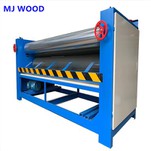
Parameter setting is a key technique for ensuring processing quality. Different processes have strict requirements for process parameters such as temperature, pressure, speed, and glue application amount, which must be precisely matched according to raw material characteristics, board thickness, and glue type. For example, the temperature field and pressure distribution of the hot press directly affect the bonding strength and flatness of the board. Temperature control values should be set in zones according to the adhesive curing curve, and the optimal pressure and time combination should be determined through trial pressing; the glue spreader should be regularly calibrated for flow rate accuracy to prevent poor interlayer bonding due to insufficient glue or waste and pollution caused by excessive glue. Parameter adjustments should be gradual to avoid sudden changes that cause equipment load shocks.
During operation, attention should be paid to process衔接 and rhythm control. Plywood production lines are mostly continuous operations, with each individual machine relying on conveying devices to transfer workpieces. Operators should be familiar with the rhythm of the preceding and succeeding processes, and adjust the feeding and discharging speeds in a timely manner to prevent workpiece accumulation or interruptions. For multi-specification production changes, the positioning blocks and fixture positions need to be recalibrated, and the replacement and sharpening of tools and pressure rollers should be checked to ensure accurate processing dimensions.
Daily maintenance and cleaning are also part of the usage techniques. At the end of each shift, the equipment surfaces should be cleaned of dust and wood chips, especially the transmission components, guide rails, and sensors, to prevent foreign matter from affecting operating accuracy. Lubricating oil and hydraulic oil should be added or replaced according to the prescribed schedule, and the wear of vulnerable parts should be checked and replaced promptly to extend equipment life and maintain processing stability. The electrical control cabinet should be protected from dust and its temperature and humidity should be managed to prevent short circuits or component aging.
Safe operation is a non-negotiable requirement. Operators must wear appropriate personal protective equipment and are strictly prohibited from cleaning or adjusting the equipment while it is running; protective devices should be installed on high-speed rotating, reciprocating, and high-temperature parts, and interlocking and emergency stop procedures must be strictly followed to ensure personnel and equipment safety.
In summary, the operating techniques for plywood machinery encompass aspects such as pre-operation checks, precise parameter setting, process coordination, standardized maintenance, and safe operation. By systematically applying these key points, equipment efficiency and product consistency can be significantly improved, providing a solid guarantee for high-quality and efficient plywood production.
Plywood Machinery Usage Techniques And Operating Essentials
Nov 22, 2025




Send Inquiry
Latest News



Contact Us
- WeChat&whatsapp:
+8613365001069 (Jane Lin-Sales Director) - Email: jane@mjwoodindustry.com (Sales Director)
- Email: rita@mjwoodindustry.com (Sales)
- CBD Sales Office Add: Room 1005, Building C, No. 88 Shuixian Street, Longwen District, Zhangzhou City, Fujian Province
- Factory: 5 manufacturing bases located in Fujian province, China.