

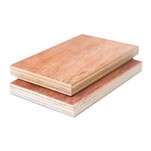
The forming process of plywood machinery is the core process that transforms multiple layers of veneer into finished panels with stable structure and uniform performance through processes such as gluing, assembly, and hot pressing. The rigor of its process logic and the precision of parameter control directly determine the mechanical strength, dimensional stability, and appearance quality of the product. This process is based on the principle of layered composite materials, integrating mechanical transmission, heat transfer, and interface bonding technologies to form a qualitative transformation path from loose veneers to dense panels.
The first step in the forming process is veneer pretreatment and gluing. Veneers obtained by rotary cutting or slicing must first be trimmed to ensure regular dimensions and straight edges. Subsequently, drying or humidification treatment is performed to control the moisture content within the allowable range to prevent blistering or delamination caused by rapid evaporation of moisture during hot pressing. The gluing process uses quantitative gluing technology, setting the coating amount according to the characteristics of the adhesive and the surface condition of the veneer, ensuring a uniform glue layer without gaps or excess glue. The glued veneers need to be briefly aged to allow the adhesive to form a moderate initial tackiness on the surface, providing good bonding conditions for subsequent assembly.
Assembly is the key structural construction step in the forming process. Multiple layers of veneer are stacked according to the principle of perpendicular fiber direction, forming an odd-numbered layer symmetrical structure to counteract the anisotropic deformation stress of the wood. The assembly process relies on positioning devices and clamping mechanisms to ensure that the veneer layers are aligned without misalignment, and that the species and thickness of the core and surface layers meet the design performance requirements. The assembled panel needs to undergo pre-pressing treatment, using short-term low pressure to initially bond the veneers, expel some air, and reduce thickness rebound during hot pressing, improving the final density.
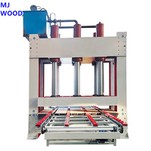
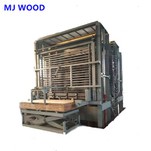
Hot pressing is the core transformation step in the forming process. Its principle is to promote the curing of the glue layer and achieve rigid interlayer bonding through the synergistic effect of heat and pressure. The hot press machine uniformly transfers heat to the panel through heating plates, activating the adhesive molecules and causing cross-linking reactions; at the same time, the hydraulic system applies uniform pressure, forcing the glue layer to be in close contact with the wood surface, filling microscopic voids and expelling residual air. The matching of temperature, pressure, and time must strictly follow the adhesive curing curve: too low a temperature results in incomplete curing, while too high a temperature can lead to charring of the adhesive layer or degradation of the wood; insufficient pressure weakens the interlayer bonding force, while excessive pressure may cause excessive wood compression or adhesive leakage. Modern hot-pressing processes often employ segmented pressurization and programmed temperature control techniques, with low pressure for initial degassing, high pressure for curing, and subsequent pressure maintenance for shaping, ensuring the flatness and bonding strength of the panels.
After molding, the panels undergo depressurization, cooling, and post-processing. The cooling process slows down the release of residual stress in the adhesive layer, preventing panel warping; the trimming process removes irregular edges, ensuring dimensional accuracy; and sanding removes microscopic surface irregularities, providing an ideal substrate for subsequent finishing or coating. Quality inspection verifies the effectiveness of the molding process by assessing bonding strength, formaldehyde emission, thickness deviation, and appearance defects.
In summary, the molding process of plywood machinery is a systematic engineering process based on layered structure design, with uniform adhesive application, symmetrical assembly, and hot-pressing parameters as the core, supplemented by pre-pressing, cooling, and post-processing. The precise coordination and strict control of each stage ensure the reliable transformation of loose veneers into high-performance finished products, laying the foundation for their application in construction, furniture, and other fields.
Analysis Of The Forming Process Of Plywood Machinery
Nov 23, 2025



Send Inquiry
Latest News



Contact Us
- WeChat&whatsapp:
+8613365001069 (Jane Lin-Sales Director) - Email: jane@mjwoodindustry.com (Sales Director)
- Email: rita@mjwoodindustry.com (Sales)
- CBD Sales Office Add: Room 1005, Building C, No. 88 Shuixian Street, Longwen District, Zhangzhou City, Fujian Province
- Factory: 5 manufacturing bases located in Fujian province, China.