

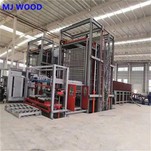
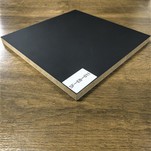
Plywood machinery is the core equipment system for achieving large-scale and refined production of plywood. Its technological level directly determines the quality stability, production efficiency, and resource utilization efficiency of the product. As an important part of the man-made board industry, plywood machinery covers equipment for the entire process from raw material pretreatment to finished product inspection, forming a complete chain of interconnected and collaborative operations.
In the raw material processing stage, key machinery includes log debarking machines, cutoff saws, and drying kilns. Log debarking machines efficiently remove bark through mechanical or hydraulic action, improving veneer quality and yield; cutoff saws cut logs to specified lengths according to process requirements, providing uniformly sized wood sections for the rotary cutting process; drying kilns use hot air circulation or steam heating to precisely control the moisture content of the wood within the process window, preventing subsequent processing defects caused by moisture imbalance.
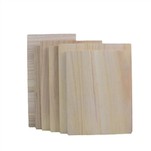
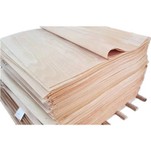
In the veneer preparation stage, rotary cutting machines and slicing machines are the core equipment. Rotary cutting machines use high-speed rotating blades to continuously cut logs into thin veneers; the matching of the blade bed angle and feed speed determines the thickness uniformity and surface smoothness of the veneer; slicing machines are used to produce decorative surface veneers with beautiful textures, and the precision of the blade sharpening and the stability of the feeding directly affect the integrity and aesthetics of the grain pattern.
The supporting shearing machines and edge trimming machines are responsible for cutting continuous veneers into specified sizes and ensuring straight edges.
The gluing and assembly processes rely on gluing machines and assembly tables. Gluing machines can achieve quantitative and uniform gluing; some models are equipped with automatic metering and atomization devices to adapt to different types of adhesives and process requirements; the assembly table uses positioning and pressing mechanisms to ensure that multiple layers of veneer are precisely stacked in the direction perpendicular to the fibers, forming a symmetrical structure. The level of mechanization and automation in this stage is a key factor affecting the bonding strength and stability of the board.
The hot pressing process is dominated by multi-layer hot presses. These machines control temperature, pressure, and time to promote full curing of the adhesive layer and achieve rigid interlayer bonding. Modern hot presses often utilize segmented pressure application and programmed temperature control, allowing for optimized process curves tailored to different thicknesses and adhesive types, thus reducing defects such as blistering and delamination. Cold presses also play a supporting role in pre-pressing and short-cycle production.
Post-processing and inspection machinery includes edge trimming saws, sanding machines, surface repair equipment, and online inspection systems. Edge trimming saws ensure precise and square dimensions of the finished product; sanding machines improve surface flatness and smoothness, creating optimal conditions for the finishing process; surface repair equipment automatically identifies and fills surface defects; and online inspection systems provide real-time monitoring of thickness, bonding strength, and formaldehyde emissions, enhancing process quality control capabilities.
The development trend of plywood machinery is moving towards digitalization, intelligence, and energy efficiency and environmental protection. CNC systems enable multi-process linkage and precise parameter adjustment; intelligent sensors and data platforms support predictive maintenance and quality traceability; and energy-efficient heat sources and waste heat recovery devices reduce production energy consumption and carbon emissions.
In summary, plywood machinery, as the technological link between raw materials and finished products, determines the competitiveness of the industry. Continuous optimization of machinery design and process flow will provide solid support for the high-quality and sustainable development of the plywood industry.
Technological Evolution And Production Support Of Plywood Machinery
Nov 19, 2025

Send Inquiry
Latest News



Contact Us
- WeChat&whatsapp:
+8613365001069 (Jane Lin-Sales Director) - Email: jane@mjwoodindustry.com (Sales Director)
- Email: rita@mjwoodindustry.com (Sales)
- CBD Sales Office Add: Room 1005, Building C, No. 88 Shuixian Street, Longwen District, Zhangzhou City, Fujian Province
- Factory: 5 manufacturing bases located in Fujian province, China.