

Since its inception, plywood, with its structural advantages and adjustable performance, has gradually developed into an indispensable basic material in the modern timber industry. Its value is not only reflected in its physical properties and functional adaptability, but also extends to resource utilization, economic contribution, and sustainable development, constituting a multi-dimensional industrial significance.
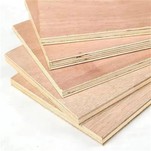
From a material performance perspective, plywood, with its symmetrical structure formed by cross-laminating an odd number of veneers, overcomes the anisotropic defects of natural wood, giving the panels excellent dimensional stability and balanced mechanical properties. The improvement in bending strength, compressive strength, and nail-holding capacity allows for higher reliability and longer service life in applications such as construction formwork, load-bearing furniture, and transportation packaging. Through the combination of different tree species and layers, plywood can precisely match differentiated needs such as lightweight, high strength, and water resistance, expanding the scope of application of wood materials in engineering and manufacturing.
In terms of economic value, plywood offers excellent cost-effectiveness and ease of processing. Its flat surface and uniform texture facilitate sawing, drilling, sanding, and diverse surface decoration, allowing for efficient integration into industrialized mass production and personalized customization processes, reducing processing losses and labor costs. Compared to solid wood panels, plywood has a lower dependence on large-diameter, high-quality timber, and can use small-diameter timber, branches, and fast-growing trees as main raw materials, improving the comprehensive utilization rate of wood. This ensures supply while optimizing production costs and enhancing the resilience of the industrial chain.
Resource and environmental value are also prominent. Plywood achieves efficient integration of low-grade or scattered timber resources through lamination, reducing the pressure on harvesting high-quality natural forests and aligning with ecological protection and carbon sequestration goals. With the promotion and application of low-formaldehyde and formaldehyde-free adhesives, its environmental performance continues to improve, meeting the requirements of green building and indoor health and safety, contributing to the improvement of the living environment. At the same time, the recyclability of plywood provides a feasible path for building a "production-use-recycling" closed-loop system, promoting the industry's transition to low-carbon development.
At the level of industrial synergy, plywood, as a common base material for numerous industries such as construction, furniture, packaging, and transportation, plays a role in connecting upstream and downstream industries and promoting cross-领域的 technological integration. Its stable supply and customizable performance provide reliable support for downstream product innovation and standardized production, driving the development of related equipment, chemical auxiliaries, and surface treatment technologies.
In summary, plywood, with its reliable performance, cost-effectiveness, environmental friendliness, and industrial linkages, has solidified its crucial position in modern manufacturing and construction industries, and continues to exert a positive impact in the process of green and low-carbon development.
The Value Dimensions And Industrial Significance Of Plywood
Nov 18, 2025

Send Inquiry
Latest News



Contact Us
- WeChat&whatsapp:
+8613365001069 (Jane Lin-Sales Director) - Email: jane@mjwoodindustry.com (Sales Director)
- Email: rita@mjwoodindustry.com (Sales)
- CBD Sales Office Add: Room 1005, Building C, No. 88 Shuixian Street, Longwen District, Zhangzhou City, Fujian Province
- Factory: 5 manufacturing bases located in Fujian province, China.