

In modern woodworking and construction engineering, the practicality of materials often determines their market competitiveness. Thanks to its reasonable structure, balanced performance, and ease of processing, plywood has demonstrated high practical value in numerous fields, becoming a preferred material that balances functionality and economy.
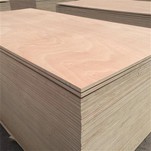
The practicality of plywood is first reflected in its dimensional stability and wide adaptability to various environments. It uses an odd number of veneers laminated with the grain direction perpendicular to each other, forming a symmetrical mechanical structure that effectively suppresses warping and cracking caused by humidity changes, allowing the panels to remain flat even under fluctuating temperature and humidity conditions. This characteristic enables plywood to maintain long-term performance in various applications such as interior decoration, construction formwork, and ship lining, reducing maintenance and replacement costs.
In terms of mechanical properties, plywood possesses balanced bending, compression, and nail-holding capabilities. The orthogonal arrangement of layers ensures even stress distribution, preventing localized damage, making it reliable in load-bearing applications such as furniture, structural partitions, and transportation packaging. By selecting different types of veneers and adjusting the number of layers, it can be optimized to meet requirements for lightweight, high-strength, or impact resistance, satisfying diverse needs from precision instrument packaging to large-scale engineering formwork.
Processing performance is another highlight of its practicality. Plywood has a flat surface and uniform texture, making it easy to saw, drill, sand, and apply various surface treatments, allowing for flexible creation of complex shapes and diverse surface finishes. Its good bonding and coating adhesion enable seamless integration into industrialized mass production and personalized customization processes, improving production efficiency and ensuring product consistency.
In terms of durability, depending on the adhesive and processing technology, plywood can offer different grades of water resistance, moisture resistance, and weather resistance, adapting to harsh indoor and outdoor environments. Low-formaldehyde emission products are also becoming increasingly common, meeting green building and health and safety standards, making them more widely used in sensitive spaces such as homes, schools, and hospitals.
In terms of resource utilization, plywood efficiently integrates small-diameter timber and fast-growing timber, improving the comprehensive utilization rate of wood resources, alleviating pressure on natural forest resources, and offering both ecological and economic benefits. Its recyclability and reusability also align with the concept of sustainable development. Overall, plywood, with its comprehensive advantages of stability, strength, ease of processing, and environmental sustainability, provides solutions that combine performance and economic efficiency for industries such as construction, furniture, packaging, and transportation, demonstrating outstanding practical value in modern manufacturing and engineering practices.
An Exploration Of The Practicality Of Plywood
Nov 17, 2025



Send Inquiry
Latest News



Contact Us
- WeChat&whatsapp:
+8613365001069 (Jane Lin-Sales Director) - Email: jane@mjwoodindustry.com (Sales Director)
- Email: rita@mjwoodindustry.com (Sales)
- CBD Sales Office Add: Room 1005, Building C, No. 88 Shuixian Street, Longwen District, Zhangzhou City, Fujian Province
- Factory: 5 manufacturing bases located in Fujian province, China.