

In plywood production, the stable operation of machinery and equipment is a core element in ensuring product quality and production efficiency. A scientifically sound maintenance cycle plan not only extends equipment lifespan and reduces the risk of sudden failures, but also minimizes downtime losses through preventive maintenance, thereby improving overall production efficiency.
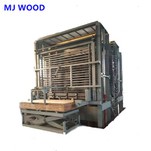
Plywood machinery encompasses diverse types, including hot presses, glue spreaders, edge trimmers, and sanders. Their maintenance cycles need to be differentiated based on equipment function characteristics and usage intensity. Generally, daily maintenance focuses on pre-shift and post-shift checks, primarily including cleaning dust from the machine body, checking lubrication point oil levels, tightening loose bolts, and observing instrument parameters for normal operation. This basic maintenance is short and easy to perform, yet effectively prevents jamming problems caused by accumulated debris or insufficient lubrication. It is recommended to perform this once per shift, completed and recorded by the operator.
Periodic in-depth maintenance should be carried out on a weekly, monthly, and quarterly basis. Weekly maintenance focuses on the transmission system, such as checking belt tension, gear meshing clearance, and chain lubrication status, and promptly cleaning residual glue from the guide rails; monthly maintenance extends to hydraulic and pneumatic systems, requiring testing of oil circuit sealing and air pressure stability, replacing aging seals, and calibrating the hot press oil temperature control device. Quarterly maintenance is more comprehensive, involving electrical circuit insulation testing, bearing clearance measurement, and wear assessment of key components. If necessary, the surface flatness of the glue spreading rollers should be polished and repaired to ensure uniform coating.
Annual overhaul is a "critical node" in the maintenance cycle, requiring concentrated downtime. During this stage, core components should be disassembled, such as hot press plate flatness correction, motor winding insulation testing, and control system program optimization. Simultaneously, parts that have reached their fatigue limit should be replaced based on equipment operating hours and technical manual recommendations. It is worth noting that production lines with high-load continuous operation can appropriately shorten the monthly and quarterly maintenance intervals, while companies with significant seasonal fluctuations need to dynamically adjust their plans to avoid "over-maintenance" or "delayed maintenance."
The standardized implementation of maintenance cycles essentially involves proactively managing equipment through institutionalized processes. Companies should establish a closed-loop system that includes responsible personnel, operating standards, and acceptance records, and regularly train operators to identify early warning signs of abnormalities. This will shift maintenance from a "reactive response" to "proactive prevention," laying a solid foundation for the efficient and stable production of plywood.
Scientific Planning And Implementation Of Plywood Machinery Maintenance Cycles
Nov 24, 2025



Send Inquiry
Latest News



Contact Us
- WeChat&whatsapp:
+8613365001069 (Jane Lin-Sales Director) - Email: jane@mjwoodindustry.com (Sales Director)
- Email: rita@mjwoodindustry.com (Sales)
- CBD Sales Office Add: Room 1005, Building C, No. 88 Shuixian Street, Longwen District, Zhangzhou City, Fujian Province
- Factory: 5 manufacturing bases located in Fujian province, China.