

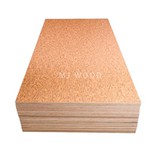
Hardwood plywood, due to its high strength, beautiful grain, and good dimensional stability, is widely used in building decoration, furniture manufacturing, and structural load-bearing applications. To ensure construction quality and safety, it is essential to strictly follow systematic construction standards, forming unified technical specifications from material selection and pretreatment to installation and acceptance, in order to fully utilize the material's performance and extend its service life.
The first step in construction is material selection and inspection. Hardwood plywood should be selected according to the design requirements, using products of the appropriate grade and thickness. The appearance should be checked for blistering, delamination, edge damage, and significant color differences, ensuring that the adhesive strength of the base material and formaldehyde emission levels meet current national standards. For panels used for load-bearing or exterior walls, their water resistance, moisture resistance, and corrosion resistance performance indicators should also be verified to prevent deformation or strength failure caused by material defects. Upon arrival, the panels should be stored in a well-ventilated and dry place, classified and stacked with the bottom elevated to prevent moisture absorption, and protected from direct sunlight and rain.
Base surface treatment is a prerequisite for ensuring bonding and installation quality. The surface of the wall, joists, or frame should be flat, clean, free of oil stains and loose particles, and the moisture content must be controlled within a suitable range. For substrates with high humidity, ventilation or dehumidification measures should be taken to prevent the panels from absorbing moisture and expanding, leading to warping or cracking. Before laying, reference lines should be marked to determine the joint positions and panel elevation, ensuring that the overall flatness and joint straightness meet the design tolerances.
The installation process must be carried out according to standard procedures. When using adhesive or mechanical fastening, the adhesive should be applied evenly and in an appropriate amount, and the joint surfaces must be tightly fitted to avoid voids; the spacing and penetration depth of screws or nails should be controlled to prevent cracking of the surface hardwood or exposed nails on the back. For multi-layer stacking or large-area paving, staggered joint arrangement is recommended to distribute stress and reduce the risk of warping. For door and window openings or irregularly shaped areas, the panels should be pre-marked and cut to ensure neat edges and tight joints with surrounding components.
After construction is completed, maintenance and acceptance procedures are required. During initial installation, hardwood plywood should be protected from drastic changes in temperature and humidity, and mechanical impact. Ensure adequate ventilation to allow the adhesive to cure properly. Acceptance testing should include checking the flatness of the panels, the height difference at the joints, the security of the fasteners, and the overall visual quality. Any non-conforming items should be corrected promptly. During long-term use, regularly inspect the edge banding and surface coating, and perform timely maintenance to protect against moisture damage and mechanical wear.
In summary, the construction standards for hardwood plywood are centered on using qualified materials, ensuring a suitable base layer, employing rigorous processes, and conducting strict inspections. This not only guarantees the safety and aesthetics of the project but also provides reliable support for the performance and durability of the material, which is crucial for achieving high-quality wood product applications.
Standardization Requirements And Practical Significance Of Hardwood Plywood Construction Standards
Nov 26, 2025




Send Inquiry
Latest News



Contact Us
- WeChat&whatsapp:
+8613365001069 (Jane Lin-Sales Director) - Email: jane@mjwoodindustry.com (Sales Director)
- Email: rita@mjwoodindustry.com (Sales)
- CBD Sales Office Add: Room 1005, Building C, No. 88 Shuixian Street, Longwen District, Zhangzhou City, Fujian Province
- Factory: 5 manufacturing bases located in Fujian province, China.