

The appearance of plywood is not only a visual presentation but also directly reflects its internal structure and manufacturing quality. As a typical representative of laminated composite materials, plywood has formed a recognizable system of characteristics in terms of uniform specifications, surface condition, edge contours, and texture. These external elements serve functional needs and lay the foundation for subsequent processing and applications.
In terms of specifications, plywood is usually produced in standard sizes, with common dimensions such as 1220 × 2440 mm and 1525 × 3050 mm. The thickness ranges from 3 mm to 30 mm, and non-standard sizes can be customized according to use. Uniform geometric dimensions ensure the interchangeability and assembly efficiency of industrialized processing, and also facilitate warehousing and logistics management. Precise control of external dimensions relies on advanced cutting and length-setting equipment, ensuring that diagonal errors and perpendicularity of adjacent sides are within acceptable limits, thus maintaining the overall squareness of the panels.
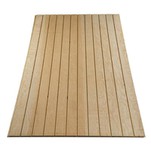
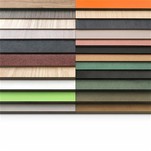
The surface condition is a key aspect of the aesthetic appeal of plywood. The surface layer often uses high-quality veneers with clear texture and uniform color, which, after sanding and finishing, presents a smooth and delicate texture without obvious dents, blisters, or scratches. Depending on the application, the surface can retain the natural wood grain, or be covered with decorative paper, film, or veneer to create diverse visual effects. High-quality plywood has low surface roughness, which is conducive to subsequent coating adhesion and color reproduction, which is particularly crucial in furniture and interior decoration applications.
The edge contour reflects the precision of processing. Conventional plywood is mainly cut at right angles, with neat edges and no burrs, facilitating splicing and edge banding. Special-purpose products can use chamfered, rounded, or tongue-and-groove edges to enhance splicing airtightness or meet styling requirements. The density of the edges and the continuity of the glue line are also indicators of external quality. Inferior products are prone to glue overflow or gaps at the interlayer joints, affecting overall aesthetics and durability.
The texture is derived from the fiber direction of the veneer and the differences in wood species. Due to the perpendicular orientation of the fibers in adjacent layers, the cross-section reveals a regular, alternating layered texture. The surface texture varies depending on the wood species, exhibiting straight grain, wavy grain, or interlocked grain patterns, imbuing the plywood with natural beauty and distinctiveness. This layered structure not only showcases the craftsmanship but also serves as an important basis for identifying authenticity and quality.
Overall, the appearance of plywood is shaped by the precision of its dimensions, surface flatness, edge processing quality, and texture. It satisfies both functional and aesthetic requirements, reflecting the rigor and maturity of the manufacturing process, and providing intuitive and reliable visual support for its widespread application in architecture, furniture, and decoration.
The Appearance Characteristics And Technological Implications Of Plywood
Dec 15, 2025
Send Inquiry
Latest News



Contact Us
- WeChat&whatsapp:
+8613365001069 (Jane Lin-Sales Director) - Email: jane@mjwoodindustry.com (Sales Director)
- Email: rita@mjwoodindustry.com (Sales)
- CBD Sales Office Add: Room 1005, Building C, No. 88 Shuixian Street, Longwen District, Zhangzhou City, Fujian Province
- Factory: 5 manufacturing bases located in Fujian province, China.